
A Sokcho Local and His Fisherman Friends
Mulhoe · Sokcho Hangari Mulhoe
A mulhoe house is decided by its ingredients, not its knife work.
That’s the conclusion we’ve reached after many years of this. However fast your hands are, however good your broth is, if the fish that came in that morning is mediocre, the guest knows immediately. There is no hiding it.
And the best ingredients are not bought with money alone. Especially not in Sokcho.
The first phone call from the harbour
I was born and raised in Sokcho.
I went to primary and middle school here and still live in the same neighbourhood. The friends I played football with, the older men from the block, the juniors who tagged along — a good number of them still go to sea. In Sokcho that is entirely ordinary.
Which produces mornings like this.
A boat comes in after a night’s fishing, and our kitchen phone rings first. “Hey, the catch is good today. Come look.”
Before it goes to the wholesale market, we get first sight of the best seafood the sea gave up that morning. Fish that has passed through auction and several handlers is not the same as fish straight off the boat. Time is freshness.
So we say it plainly:
“If a fish or shellfish isn’t at Sokcho Hangari Mulhoe, no other mulhoe house in Sokcho has it either.”
It might sound like bragging. From where we stand it’s closer to a statement of fact. If we don’t have it, the sea didn’t have it that day.
Some things money can’t buy
People sometimes ask, “Can’t you just outbid everyone?”
No. Fishermen don’t hand their best catch to just anyone. After a night of hard work, you want it going to someone who’ll treat it properly. So long acquaintance and mutual trust matter enormously.
A long time in one town becomes that kind of asset. It isn’t that we’re clever — we’re simply benefiting from having grown up here.
A shop that says “not today”
The other side of a hometown network is the pressure to stay honest.
The sea does what it wants. High seas keep boats in port, and closed seasons stop fishing by law. If the shoals move, a species can stay scarce all year.
Squid is the clearest example. Sokcho used to be synonymous with squid; now catches swing dramatically. There are stretches when the price multiplies several times over.
When that happens we price honestly at market rate. And on days when the quality isn’t there, we simply don’t sell it.
We know that’s disappointing. We hear “why not today?” fairly often. We still think it beats serving something mediocre. Anything less would embarrass the friends who caught it.
Taking ingredients like that and serving them in an earthenware pot, cold to the final spoonful — that’s the whole of what we do.
The season decides the menu
Buying straight from the boats has a natural consequence: the composition of our mulhoe shifts through the year.
Spring brings what’s best in spring, autumn what’s best in autumn. Species under closed-season protection drop out and others take their place.
So please treat our menu photos as examples. Whatever day you come, we fill the bowl with the best the sea gave that morning. That much we can promise.
Giving back to the city
Sokcho is a city of people displaced from the North.
Families who fled south during the Korean War stopped here thinking they’d soon return home — and this became home instead. That’s how Abai Village got its name.
Those elders are our parents’ generation, and our fishermen friends’ parents too. People who spent their lives working the sea to raise their children.
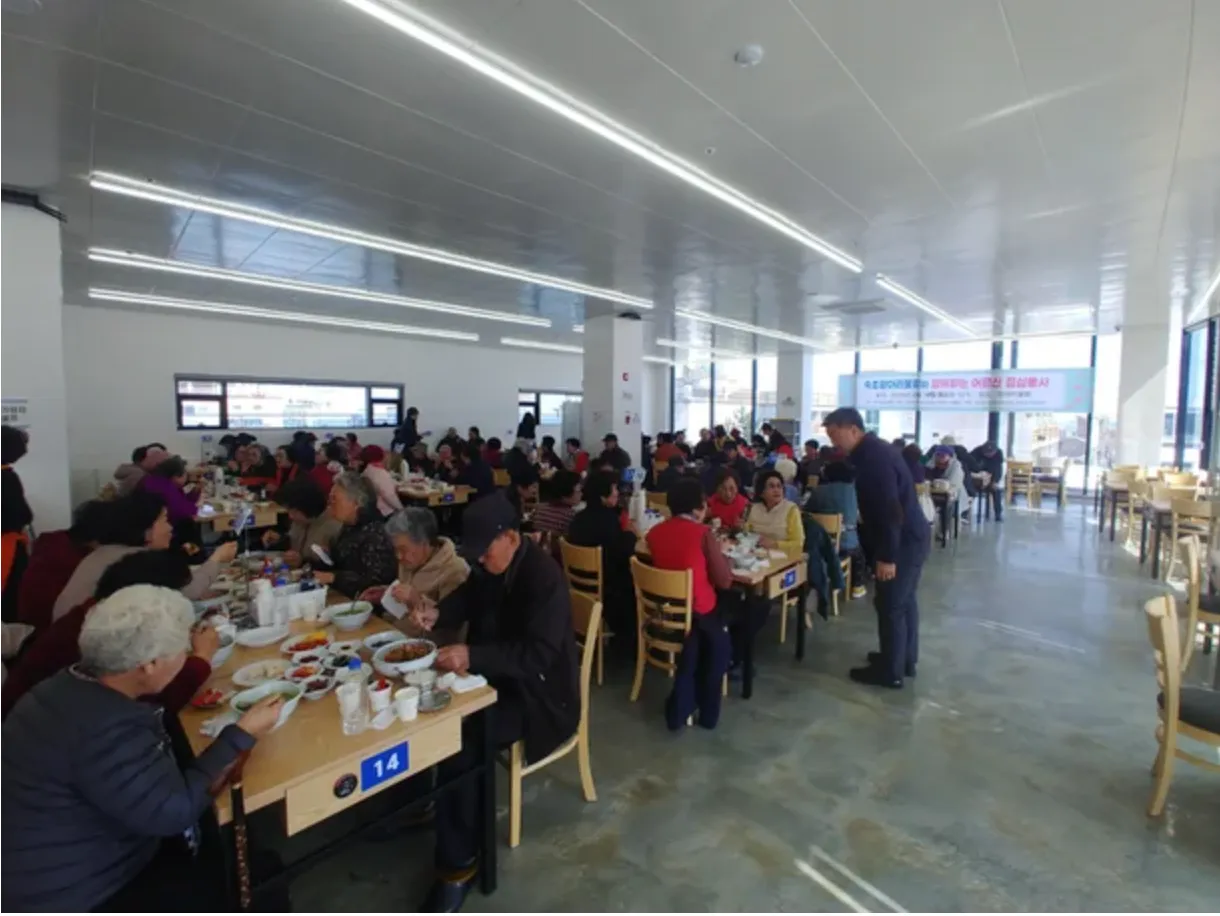
So twice a year, Sokcho Hangari Mulhoe invites around 300 displaced elders for a meal.
There’s no grand reason. A restaurant that lives off the Sokcho sea doing something for Sokcho just seems obvious to us.
Those days are chaos, with our large third-floor hall completely full. They’re also the best days of the year. One “that was good” from an elder is enough to carry you a long way.
Come taste today’s sea
What the sea gave that morning, at its best, served in an earthenware pot.
We’re directly in front of Sokcho Beach and a 3-minute walk from Sokcho Express Bus Terminal. Arriving without a car is no problem at all, and our car park is very large.
After eating, walk out to the beach behind us — or swim, in summer. Don’t forget a photo from our top-floor Sky Stairs viewpoint.
You may also like