
Abai Village and the Gaetbae — A Village Built by Refugees, and a Boat You Pull Across by Hand
Sokcho travel · Sokcho Hangari Mulhoe
Prices and hours verified as of: 2026-08-15
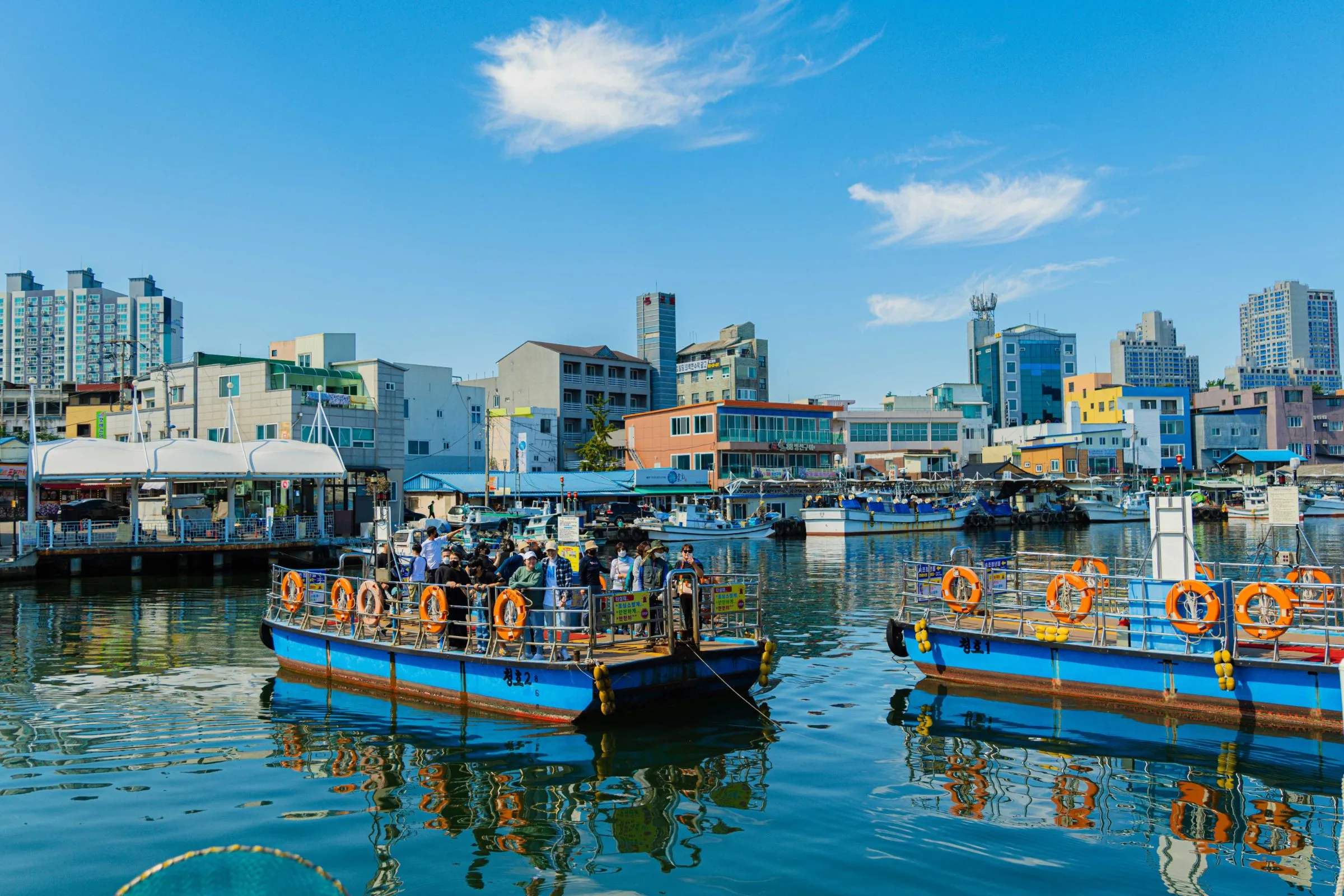
Running a mulhoe restaurant on Sokcho Beach, I get the same question several times a day.
“What is a gaetbae?”
To talk about the boat, I have to talk about the village first. Because that boat was never built for tourists. It was built so people could live.
This village was not supposed to exist
January 1951, during what Koreans call the January Fourth Retreat.
Chinese forces pushed south, the South Korean army fell back, and people from Hamgyong Province — the far northeast of the peninsula — followed the soldiers down. By boat, on foot, carrying children on their backs. Most of them believed they would be home again in a few days.
That is why almost nobody packed properly.
Then, in 1953, came the armistice. A line was drawn across the country, their hometowns ended up on the other side of it, and the way back closed.
The place where those families settled is today’s Cheongho-dong, Sokcho.
Back then Sokcho was not even a city — it was a township in Yangyang County. The site was a sandbar wedged between the sea and a lagoon, land nobody had wanted. They built shacks on it. Temporary ones. Temporary, because they were going home soon.
That temporary arrangement is now over seventy years old.
What does “Abai” mean?
In the Hamgyong dialect, it means “elder” — roughly, “grandfather.”
It became the name of the neighbourhood simply because that is who lived there: older people from Hamgyong. Nobody officially named it. People called it that, and it stuck.
The name itself is the village’s history.
The gaetbae — a boat with no engine
The village is not attached to the mainland. A channel of about fifty metres runs between them.
Going around by land meant a long walk. So they built the gaetbae.
Step aboard and you will see a steel cable stretched across the water. You hook the cable and pull it, hand over hand, and the boat moves. No engine. No oars. No sail. It runs on human arms.
The crossing takes about three minutes.
Visitors are welcome to grab the hook and pull. Nobody will stop you — we actively tell people to try it, because that is half the reason to ride. It is the moment children love most.
| Fare (one way) | 500 won adult · 300 won child (elementary) · 500 won for a bicycle or handcart |
| Hours | May–Oct 05:00–23:00 · Nov–Apr 05:30–22:30 |
| Crossing time | About 3 minutes (channel roughly 50 m) |
| Capacity | 32 people, including the operator |
| Address | 39 Jungang-budu-gil, Sokcho |
| Phone | 033-639-2449 |
Bad weather stops the service. On days with strong wind or high waves, call before you go — people do turn up and find it not running.
And please do not read the 500-won fare as a bargain for tourists. It is that cheap because this was never a tourist attraction. Village elders still take it to go grocery shopping.
Autumn in My Heart changed this place
In 2000, the drama Autumn in My Heart was filmed here.
The scene with the heroine crossing on the gaetbae holding a yellow umbrella, and her brother watching from the boat going the other way. It was a huge hit in Korea, Japan and China, and tourists began arriving in numbers.
Honestly, I have mixed feelings about this part.
I am grateful the drama put the village on the map. But why the village exists got pushed into the background. Of the people who come to ride the gaetbae, fewer than you would think know they are standing in a refugee settlement.
So that is why I am writing this. Not to argue against the drama — just that if you know both stories, the boat looks different from the deck.
The food this village invented
The refugees wanted to cook the food of home, and the ingredients were not here. So they rebuilt those dishes out of what was. Half of Sokcho’s food came from that problem.
Abai sundae
Hamgyong-style blood sausage: pig’s large intestine packed with glutinous rice, blood and vegetables, then steamed.
It is far thicker and heartier than the sundae you usually see. One plate is a meal. The specialist shops are clustered in Abai Village.
Squid sundae (ojingeo sundae)
This one was invented in Sokcho, full stop.
In years when pig intestine was hard to come by, people used what the harbour had plenty of — the body of a squid — as the casing, and stuffed that instead. Sliced, it comes out as white rings with the filling set inside: good-looking and mild-tasting.
A dish born out of scarcity that is now one of the things Sokcho is known for. We serve it too.
Hamhung naengmyeon
Hamhung is a city in Hamgyong. Chewy noodles made from potato or sweet-potato starch, served with spicy sauce and raw fish, mixed together cold.
That is why Sokcho and Goseong just north of it have such an unusual density of Hamhung naengmyeon restaurants.
There is refugee history inside Sokcho’s food. That is not a poetic flourish; it is just what happened.
How our restaurant is tied to this village
Twice a year, we host around three hundred elders from Abai Village for a meal.
There was no grand intention behind starting it. A restaurant that lives off the Sokcho sea doing something for Sokcho just seemed obvious.
We set the tables on the third floor and serve them one by one. The place gets very loud on those days, in the best way.
Some of them talk about home while they eat. Which town in Hamgyong they came from, how they used to make this dish there. Seventy years on, that well has not run dry.
Getting there
Abai Village sits right beside downtown Sokcho.
- By gaetbae — three minutes from the Jungang-dong landing. The shortest and by far the most fun route
- By bus — city buses 7 and 9 stop near the gaetbae landing
- By car — go around by the bridge. About 10 minutes from our restaurant on Sokcho Beach
- On foot — a little over 10 minutes from Sokcho Tourist & Fishery Market to the landing
If you are planning a route, market → gaetbae → village → gaetbae back flows naturally. Plenty of people buy dakgangjeong at the market and eat it on the other side.
Worth knowing before you go
- This is not a long visit. The lanes and the ferry together take one to one and a half hours.
- If you arrive expecting a spectacle, you will be disappointed. It is a quiet residential neighbourhood, not an attraction — a place where people live.
- Please think once before you photograph. Down the lanes, those are real homes with real elderly residents. Windows and yards are worth leaving alone.
- Rain does not stop the gaetbae. Wind does. Rain is usually fine — but call ahead anyway.
Before you take the boat
While you are pulling that cable, I would ask you to think about one thing.
Seventy years ago, someone pulled the same cable. Not a tourist — a mother going to buy food, a child heading to school, and the people from Hamgyong who set their bags down on this sandbar believing they would be leaving soon.
They never went home. Instead they built a village here, and invented food here, and that food is now the face of Sokcho.
It is only a fifty-metre channel. But cross it with that in mind and it feels different.
If you are in Sokcho, I would also point you to the Unification Observatory — fifty minutes by car, where you can see the North Korean coastline with your naked eye. The story that starts in Abai Village ends there.
And when you have walked the village and the market and you get hungry, come down to the water. We will make you a cold bowl of mulhoe.
See the menu · Find us · +82-33-635-4488
You may also like