
How to Eat Mulhoe — A First-Timer's Guide
Mulhoe · Sokcho Hangari Mulhoe
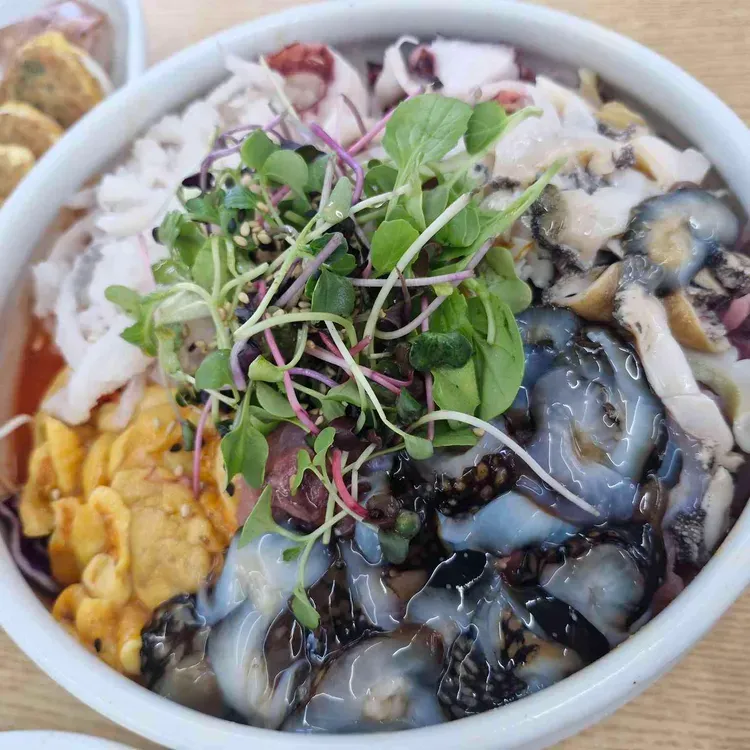
Order mulhoe for the first time and it arrives as an earthenware pot piled with raw fish, alongside thin noodles and a bowl of rice.
Most people then make the same face. “So… how do I eat this?”
That’s fine. Everyone starts there. There’s no single correct method, but locals in Sokcho follow a particular order. Do it this way and it tastes noticeably better.
Step 1 — Taste the fish before you pour anything
This is the step most people skip.
Before adding the broth, eat a few slices of the fish plain. It is your only chance to taste the ingredients before the seasoning takes over.
The springiness of abalone, the crunch of sea cucumber, the clean sweetness of white fish are all at their clearest right now. Pour the broth straight away and you’ll never know what that day’s catch actually tasted like.
This is exactly where our insistence on wild-caught seafood shows up. The gap between farmed and wild is most obvious with no sauce at all.
Tip — skip the dipping sauce for these first bites. You’ll pick up the natural sweetness.
Step 2 — Pour the broth and mix gently
Now add the ice-flaked broth.
Don’t dump it in all at once. Pour slowly, moving around the pot, so the ingredients stay arranged and get evenly coated.
Then mix so the fish, vegetables and seasoning combine. Mix too hard and the fish breaks up — think of it as folding rather than stirring.
Take a spoonful of the broth first. That first sip is the highlight of mulhoe.
Sweet, tangy and freezing cold going down — that’s the moment you understand what the fuss is about. Taste it properly now, because once noodles and rice go in the flavour changes.
Step 3 — Noodles at halftime
Add the thin noodles once you’ve worked through a decent amount of the fish.
Don’t add them at the start. They soak up the broth and bloat, and you’ll have nothing left to mix the rice into later. About halfway through the fish is ideal.
Noodles loaded with icy broth are a completely different pleasure from cold noodle dishes. They’re thin enough that the broth flavour comes straight through.
Tip — add only half the noodles at first. Save the rest until just before the rice, and both servings stay springy.
Step 4 — Finish with rice
Stir the rice into whatever broth remains.
Locals call this “completing the mulhoe.” The savoury depth drawn out of the seafood soaks into every grain, and you finish genuinely full.
Saving broth for this final step is the whole point — which is why we tell you not to drink it all earlier.
This is also where our earthenware pot earns its keep. An ordinary bowl would be lukewarm by now; thick ceramic keeps that last spoonful of rice cold too.
Everyone has their own version
Like we said, there’s no single right way. Watch our regulars and you’ll see:
- Broth-first people — drink lots of broth early, barely any rice. All about the cold.
- Fish-first people — pour only a little broth, eat it almost like a salad, then add more later.
- All-in people — dump everything in and mix. Honestly, also fine.
- No-noodle people — plenty of guests skip straight to the rice.
Eat however suits you. Just please do step 1. Get that right and you’re halfway there.
Common questions
Is it spicy?
Ours is on the spicy side. It isn’t a mild dish. That said, it won’t hurt your tongue, and unless you really can’t handle chilli you’ll be fine.
Think of it as sweet-tangy first, with warmth arriving gently behind it. If you’d rather avoid spice entirely, our menu has abalone porridge and sea urchin seaweed soup.
Can children eat it?
We don’t recommend mulhoe for young children because of the spice. Instead there’s kids’ abalone porridge (8,000 KRW), seasoned very lightly.
Non-spicy options include abalone porridge, sea urchin seaweed soup, snow crab rice bowl and stuffed squid. Look for the “kid-friendly” badge on the menu. See also travelling in Sokcho with children and our FAQ.
Do you serve it in winter?
Yes — mulhoe is a year-round dish. Many regulars insist winter mulhoe in a warm room is the best version there is. Fish also carries more fat in winter, which can improve the flavour.
I’m not great with raw fish. Will I be okay?
The broth softens the characteristics people usually struggle with, so guests who avoid raw fish often do fine here. If you’d still rather ease in, try the snow crab rice bowl or the sashimi rice bowl first.
Can I drink all the broth?
Please do — that’s the proper way. Ours is built to finish clean, so it never turns heavy. Hearing “I drank the whole thing” is basically our goal.
Do you do takeaway?
Yes. We pack the fish, vegetables and broth separately so you can combine them at home and keep the texture. Takeaway orders close 30 minutes before we do.
Do ingredients change by season?
They do. We use whatever fish is best at that moment, and closed seasons remove certain species entirely. Treat menu photos as examples — whenever you come, we fill the bowl with the best available that day.
After your meal
Head up to our top-floor Sky Stairs viewpoint. The sea and the Sokcho Eye ferris wheel fit into one frame, and it’s free for diners.
Sokcho Beach is directly behind the building, so walk out for a stroll — or a swim in summer.
Curious where the dish came from? Read the history of mulhoe. Knowing the story genuinely changes how it tastes.
Enjoy your meal.
You may also like