
Is Korean Raw Fish Safe to Eat? Yes — and Here's Exactly Why
Mulhoe · Sokcho Hangari Mulhoe
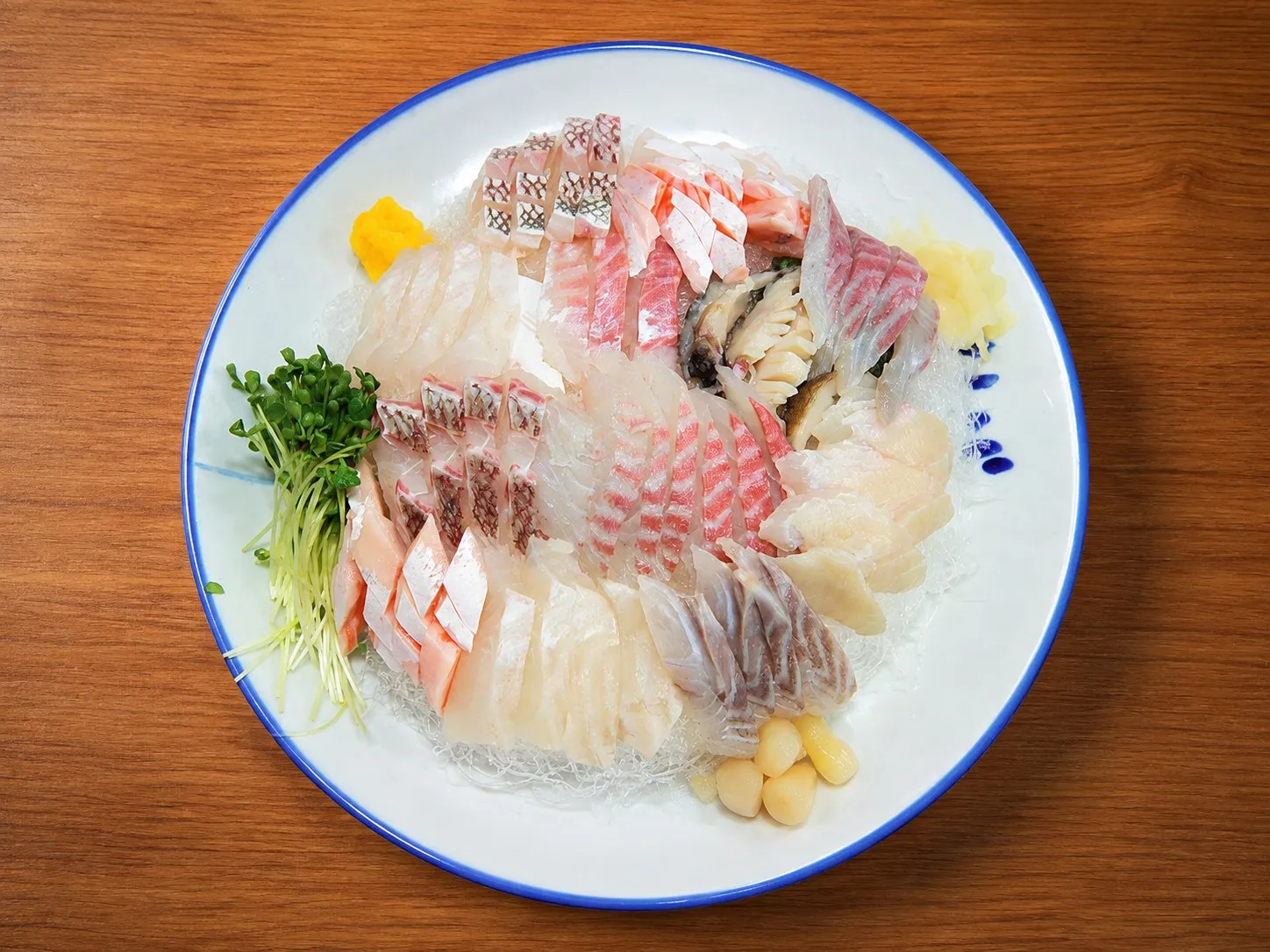
If you are standing in front of a Korean seafood menu wondering whether to risk it, here is the short answer:
Yes — as safe as raw fish gets, and the reason is built into how the country serves it.
Koreans eat this every day. Families order it for birthdays, office teams order it after work, and grandparents feed it to grandchildren. At our restaurant we serve hundreds of bowls a day, and we have done so for years on a beach where everyone knows everyone.
But “trust me” is a weak answer for someone far from home. So let me show you the actual system — what makes it work, what gets tested, and what you can verify with your own eyes in five seconds.
Korea serves live fish, not aged fish
This is the single most important thing to understand, and most visitors have never heard it.
Much of Japanese sashimi is aged — the fish is caught, then rested for hours or days to deepen its flavour. It is a refined craft and it produces wonderful food.
Korean raw fish, especially on the east coast, works the opposite way. It is hoe (회), and it is live-cut: the fish is swimming in a tank until your order comes in, and it is prepared right then. That is why the texture is firm and springy rather than soft and buttery, and why the flavour tastes of clean sea rather than deep umami.
It is a matter of taste which you prefer. But for freshness and safety, live-cut has a real structural advantage — and the next section is the reason why.
The parasite question, answered properly
The concern people have usually has a name: anisakis, a parasite that can occur in wild sea fish such as mackerel, squid, flounder and rockfish.
Here is the part that almost nobody knows, and it is the heart of this article:
Anisakis larvae stay in the fish’s internal organs while the fish is alive. They migrate into the muscle — the part you eat — only after the fish dies and time passes.
Read that again, because it reframes everything.
The longer a fish has been dead, the higher the chance the larvae have moved into the flesh. Which means live-cut fish is not just a texture preference. Cutting a fish that was alive moments ago, and removing the organs immediately, removes the window in which that migration happens.
This is exactly why Korean coastal restaurants keep tanks, and why we do too. The tradition came from wanting the freshest possible taste, and it turns out to be sound food safety as well.
One practical note, offered plainly: if you ever see a thin thread-like thing in any raw fish, anywhere in the world, do not eat it — just show it to the staff. Any decent restaurant replaces the dish immediately and thanks you. That is normal.
One honest caveat: live-cutting narrows that window sharply, but no raw fish anywhere is entirely risk-free — which is why the daily testing and the origin check below matter too.
Seafood is tested daily, to a stricter standard than most countries
Guests from Japan, China, Hong Kong and Taiwan often ask about this carefully, as if it might be an awkward question. It is not. Here are the numbers.
Seafood produced and sold in Korea is tested for radioactivity by the Ministry of Oceans and Fisheries (National Fishery Products Quality Management Service and the National Institute of Fisheries Science), the Ministry of Food and Drug Safety, and local governments. Results are published every day.
| Korea’s standard | |
|---|---|
| Caesium (¹³⁴Cs + ¹³⁷Cs) | 100 Bq/kg or less |
| Iodine (¹³¹I) | 100 Bq/kg or less |
| Versus international (Codex) standard | About 10× stricter |
| Versus US and EU standards | Stricter |
| Publication | Results released daily |
We are not asking you to take our word for it. We are telling you the testing exists, the threshold is well below the international one, and the results are public — so you can look for yourself.
The five-second check anyone can do
This is a genuinely useful habit, and visitors almost never know about it.
Korean restaurants are legally required to display the country of origin of their seafood. Twenty categories are covered by the law, including flounder, rockfish, red seabream, octopus, eel, pollock, mackerel, hairtail, squid, blue crab, croaker, abalone, yellowtail, monkfish and scallop. Live fish held in a tank must be labelled too.
So when you walk into a restaurant, look for the origin board on the wall or the menu. It will show each item as domestic, deep-sea, or imported — and domestic fish is often labelled with the specific province or city it came from.
If a place has no origin board at all, walk out. It means they are not following the law, and that tells you everything you need to know about the rest of their standards.
Five seconds. It is the most practical filter you have in Korea.
How it works at our restaurant
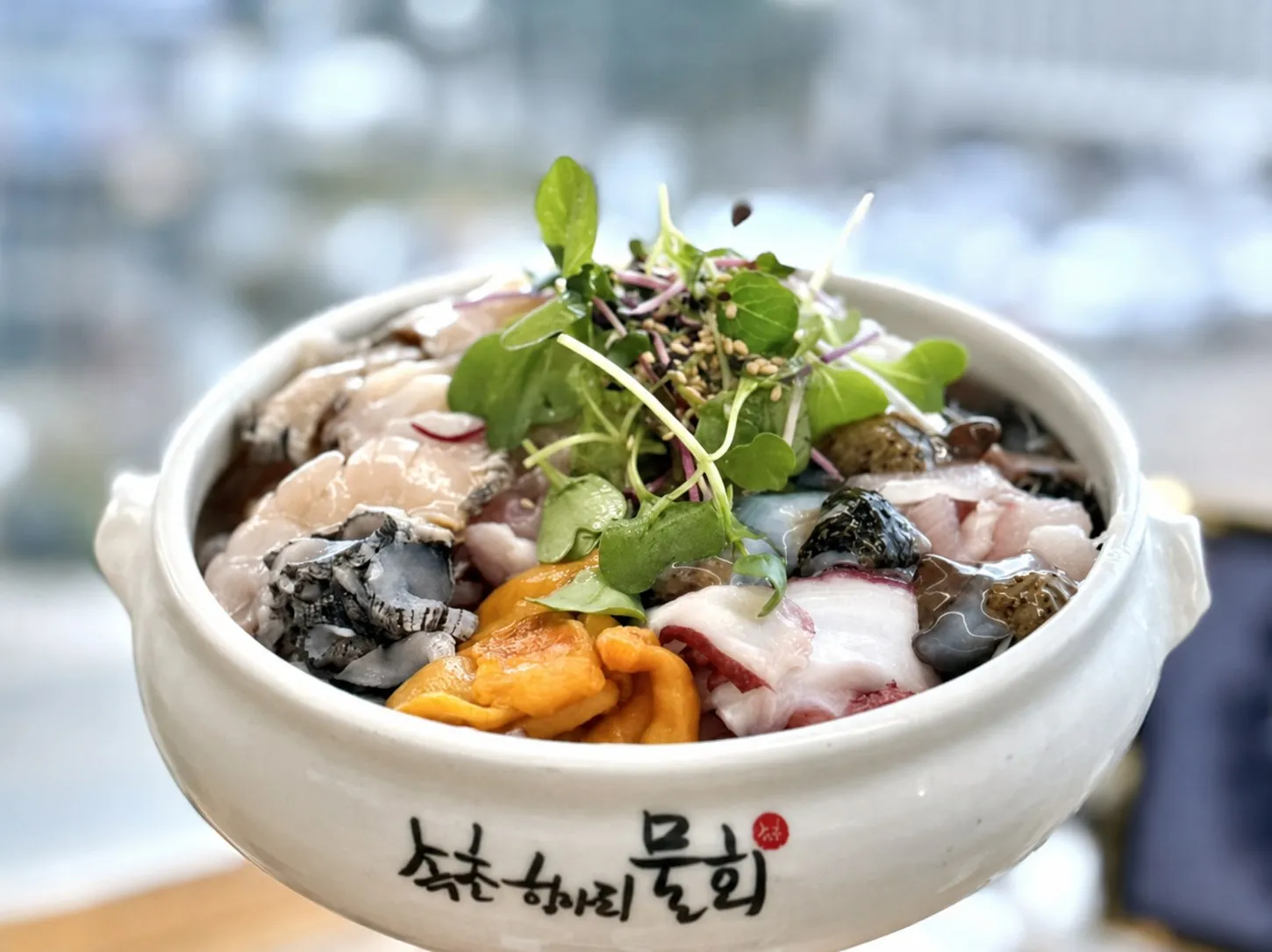
- Everything comes in the same day. I was born and raised in Sokcho, and the friends I grew up with run the boats. When the good catch lands, our kitchen is the first phone call they make. That story is here.
- Nothing is pre-cut. We prepare each order when it is placed, for the reason explained above.
- It stays cold to the last bite. This is why we insist on thick earthenware pots. Cold is good for safety and good for flavour, and a thin bowl loses it fast. Why the hangari.
- If the sea does not deliver, we do not sell it. We price honestly at market rate, or we take it off the menu that day. That has been the rule since we opened.
If you would rather have something cooked
Some guests should simply choose cooked dishes, and we would rather say so warmly than have you guess:
- If you have a chronic liver condition, diabetes, or a weakened immune system — this is the one group public health authorities specifically advise to avoid raw shellfish, particularly in warm months. Please let us look after you with something cooked.
- If you are pregnant, or feeding a very young child.
- If raw fish simply is not for you. That is a complete reason on its own, and nobody here will blink.
You will not be missing out. These are some of the best things we make:
| Dish | What it is |
|---|---|
| Abalone porridge | Silky, mild, deeply comforting. A favourite with elders and children. |
| Baby abalone porridge | The same, seasoned gently, made for kids. |
| Sea urchin seaweed soup | Nutty and rich, not spicy at all. |
| Ojingeo-sundae | Stuffed squid, steamed then pan-fried. Crisp edges, soft centre. |
| Red snow crab bibimbap | Sweet crab meat over rice. Children finish the bowl. |
See the full menu, or read what else to eat in Sokcho.
Your first bowl
If this is your first time, mulhoe is the dish to try — chilled raw fish in a sweet, tangy, gently spicy broth, the summer food of Korea’s east coast. It arrives ice-cold, and there is an order to eat it in that makes a real difference.
If you would rather ease into it, order the hoedeopbap — the same fresh fish, served over rice with vegetables and sauce. It is the friendliest way in.
The short version
- Korean raw fish is live-cut, which is both a flavour tradition and a real freshness advantage.
- Anisakis larvae move into the flesh after a fish dies — so cutting to order matters.
- Seafood is tested for radioactivity daily, at a threshold about 10× stricter than the international standard.
- Check the origin board. Five seconds, and it tells you a lot.
- If you have a liver condition, diabetes, a weakened immune system, or are pregnant, choose one of our cooked dishes — they are excellent.
Anything still on your mind, just ask. Our staff are happy to talk it through, or call us on +82-33-635-4488 before you come. Please tell us about any allergy before you order and we will pick something with you.
See the menu · Find us · FAQ
See you in Sokcho.