What to Eat in Sokcho — and What to Take Home
Sokcho travel · Sokcho Hangari Mulhoe
In Sokcho, mulhoe, seopguk mussel soup, ojingeo sundae (stuffed squid) and Abai sundae are all worth trying at least once, and at the market, try dakgangjeong. If you only have time for one meal, we’d say mulhoe.
Sokcho is a port city through and through, with more food than a short trip can cover. We run a restaurant here, so we’ve picked the food we think is worth eating in Sokcho, not just our own dishes.
Sokcho’s local dishes worth trying
Mulhoe — and not only in summer
If you’re in Sokcho you should try mulhoe at least once. Fresh raw fish in an ice-cold, sweet-and-tangy broth: the signature dish of Korea’s east coast.
Many people think of it only as summer food, but it’s a year-round dish. Plenty of our regulars insist winter mulhoe, eaten in a warm room, is the best version. It’s great after a day at the beach, too.
Locals really do eat it the morning after a night out. On a day like that, the cold broth is what they crave.
New to it? See how to eat mulhoe properly. Fish first, then broth, noodles halfway through, rice at the end. That’s the order we suggest, but if you keep only one step, make it tasting the fish first. Knowing where the dish came from makes it taste better too.
Ojingeo sundae (stuffed squid) — easy for kids too
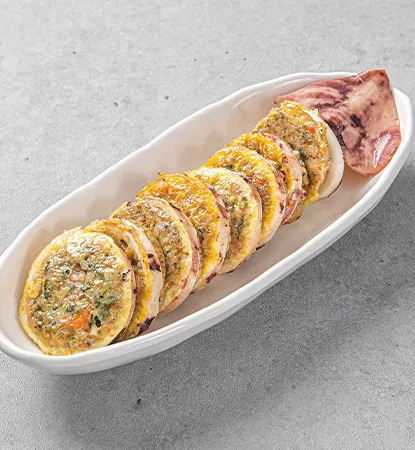
A Sokcho speciality that originated in Abai Village. Squid bodies are stuffed, steamed, sliced and pan-fried.
It isn’t spicy and has a nutty, mild flavour, so it’s a popular snack with kids. The sliced rounds look great on a table, too. You can order ojingeo sundae with us; it goes well alongside mulhoe.
Seopguk — the local dish tourists miss
Seop is Gangwon dialect for wild mussels. They’re nothing like farmed mussels in size, and the broth is far richer.
Spicy seopguk is the soup Sokcho locals reach for the morning after a night of drinking. Tourists know it less well, but it’s one we really hope visitors will try.
Abai sundae — food of the displaced
Sundae is Korean sausage. The Abai version stuffs pork large intestine with congealed blood (seonji) and glutinous rice, so it’s thicker and more packed than ordinary sundae.
It began with people who came south from North Korea and recreated the food of home, so it is a piece of Sokcho’s history in itself. Specialist shops cluster in Abai Village.
Grilled fish and gomchi-guk
Sokcho has a grilled-fish alley. Many places there serve several kinds grilled together, and the portions are generous.
Gomchi-guk (snailfish soup) is a winter speciality. It’s ugly to look at, but the broth is clean and light. Locals also know it as a morning-after soup. If you’re here in winter, it’s worth trying.
Snacks and market bites
- Dakgangjeong — the sweet crispy chicken that made Sokcho Tourist & Fishery Market famous nationwide. Built to taste good cold, so it works as a gift. Long queues at weekends.
- Ssiat hotteok (sweet pancakes stuffed with seeds and nuts) and fried snacks — easy to eat as you wander the market alleys.
- Gamja ongsimi — a Gangwon potato dumpling soup with a distinctive chewy texture. Worth trying once.
What should you take home from Sokcho?
Dried seafood, salted seafood, pollock products and dakgangjeong are easy to carry home from Sokcho and make reliable gifts.
- Dried seafood — dried squid, half-dried squid (pidegi) and dried pollock (hwangtae, and the darker meoktae) are the classic Sokcho products. They keep well, so they make easy gifts. If you take home just one thing, we recommend the dried squid.
- Salted seafood — such as myeongnan-jeot (salted pollock roe) and changnan-jeot (salted pollock innards). Sokcho Tourist & Fishery Market has plenty of salted-seafood shops, so ask for a taste before you choose. They are excellent with rice, which makes them a good gift for parents.
- Pollock products — kodari (half-dried pollock), seasoned pollock salad and other foods from Gangwon’s long pollock tradition.
- Dakgangjeong — as above. In summer, ask whether it can be packed in a cool box when you buy.
Shopping tip — dried and salted goods can be haggled at the market. Walk a few stalls before buying, and ask for vacuum packing to make transport easier.
How should you plan a day of eating in Sokcho?
If you want to fit in as much as possible:
- Morning — seopguk or gomchi-guk, the classic morning-after breakfast. Or start with mulhoe; we open in the morning.
- Lunch — a bowl of mulhoe in front of Sokcho Beach, served with noodles and rice
- Afternoon — dakgangjeong and ssiat hotteok at the market, plus dried-goods shopping
- Evening — sundae in Abai Village, or the grilled-fish alley
Only have one meal? We’d say mulhoe. Mulhoe this good is hard to find anywhere but Sokcho.
Finding us
Sokcho Hangari Mulhoe is directly in front of Sokcho Beach. We’re a 3-minute walk from Sokcho Express Bus Terminal, so arriving without a car is easy, and we have a large private car park if you drive.
Opening hours and last orders change with the day and the season, so we keep the current times on our opening hours and directions page. You can come for your first meal on an early arrival day, or for dinner; in the evening, please check last orders before you set out.
After eating, you can walk or swim at Sokcho Beach right in front of us, and our top-floor Sky Stairs viewpoint is a great photo spot.
You may also like