Sokcho in Winter: Snow, Off-Season Calm and Food You Only Get in Winter
Sokcho travel · Sokcho Hangari Mulhoe
Prices and hours verified as of: 2026-10-17
Sokcho in winter is quiet, with far fewer people about. Come to see Seoraksan under snow, to watch the sun rise out of the sea and to eat winter fish such as sandfish. One thing to know: far more snow settles on the Seoraksan side than in town.
I was born and raised in Sokcho and run a mulhoe restaurant facing the beach (mulhoe is Korean chilled raw-fish soup). To me, winter is the season when the seafront that was packed all summer empties out, and from town you can see the snow-covered peaks of Seoraksan.
Does it snow much in Sokcho in winter?
The snow piles up on the Seoraksan side; down in the seaside town there is often much less. The same snow clouds can pass over and leave very different amounts in Seorakdong, the village at the foot of the mountain, and in the town by the sea.
In the heavy snow of February 2024, 49.3 cm settled in Seorakdong (as of 7 a.m. on 22 February, according to news reports citing Gangwon Regional Meteorological Administration figures). In the heavy snow of 1–2 March 2021, Seorakdong also got 53 cm, while the observation station in Sokcho town recorded far less (Korea Meteorological Administration figures, reported by Newsis).
In town the roads tend to be cleared quickly even after snow, so if you’ve come to walk in deep snow, Seorakdong is the place rather than the town. What the town gives you instead is the view of Seoraksan under snow, which is magnificent. Look west from Sokcho Beach or from any high point in town and the white ridges stretch out behind this seaside city.
Seorakdong is 20 to 25 minutes from town by car.
How far can you go on Seoraksan in winter?
Even in winter you can walk low-level trails such as Ulsanbawi and Biseondae. Every year from late autumn into early winter, though, there is a forest-fire prevention period, and the high trails towards Daecheongbong are closed. In 2025 it ran from 15 November to 15 December (Kyunghyang Shinmun report), and low-level trails such as Ulsanbawi, Biseondae and the Towangseong Falls viewpoint stayed open.
After heavy snow, trails are closed the same day. During the heavy snow of February 2024, 21 trail sections were closed on Seoraksan alone. Before you go, check the closure information on the Korea National Park Service website.
| Where to go in winter | What to know |
|---|---|
| Ulsanbawi | A low-level trail, so it stayed open during the forest-fire prevention period (2025). The steps are often icy |
| Biseondae and the Towangseong Falls viewpoint | Low-level trails. Shaded stretches are slippery |
| Gwongeumseong (cable car) | Some days it stops when the wind is strong. Phone on the morning you go to check. The cable car only goes as far as the top station; the Gwongeumseong fortress site is a further 15 to 20 minutes on foot over rock, which is often icy |
| Daecheongbong and other high trails | Closed during the forest-fire prevention period (15 November to 15 December 2025) |
Shaded steps and rocky paths are often icy throughout the winter. Bring microspikes (slip-on traction cleats), and as the days are short, it is safer not to set off up the mountain late in the afternoon.
To find out whether the Seoraksan cable car is running, ask Seorak Cable Car (033-636-4300). I’ve written up the Ulsanbawi trail in detail in my Ulsanbawi hiking guide.
What do you eat in Sokcho in winter?
From early winter, sandfish and sand lance, both full of roe, come into Sokcho’s harbour in large numbers. Sokcho Port usually holds a sand lance and sandfish festival in late autumn. In 2025 it ran from 7 to 16 November on the port grounds at Sokcho Port (Kuki News report); you can check this year’s dates on the Sokcho City website.
At Sokcho Tourist & Fishery Market (formerly Jungang Market), the places where squid was laid out in summer hold sandfish and sand lance in winter. What I recommend at the market in winter is gomchi-guk and sandfish. Gomchi-guk is a soup of snailfish whose flesh is soft and almost melting, in a clean, refreshing broth, and many people have it as a hangover cure.
Isn’t mulhoe too cold in winter?
Mulhoe is served cold in winter too, and quite a few people still come looking for it on purpose. Koreans have a saying about fighting cold with cold: on a freezing day, these guests come in specially for a bowl of ice-cold mulhoe. Our menu is the same in winter.
If you’d rather have a hot broth, many people order seopguk or Red Snow Crab Ramyeon. Seopguk is the spicy hangover soup Sokcho people make with wild mussels (seop), and Red Snow Crab Ramyeon is ramyeon cooked in a broth simmered from red snow crab. Come in out of the sea wind, take a spoonful of broth first, and you’ll feel yourself thaw.
I’ve gathered other things worth eating in Sokcho in my Sokcho food guide.
Can you watch the sunrise over the sea in winter?
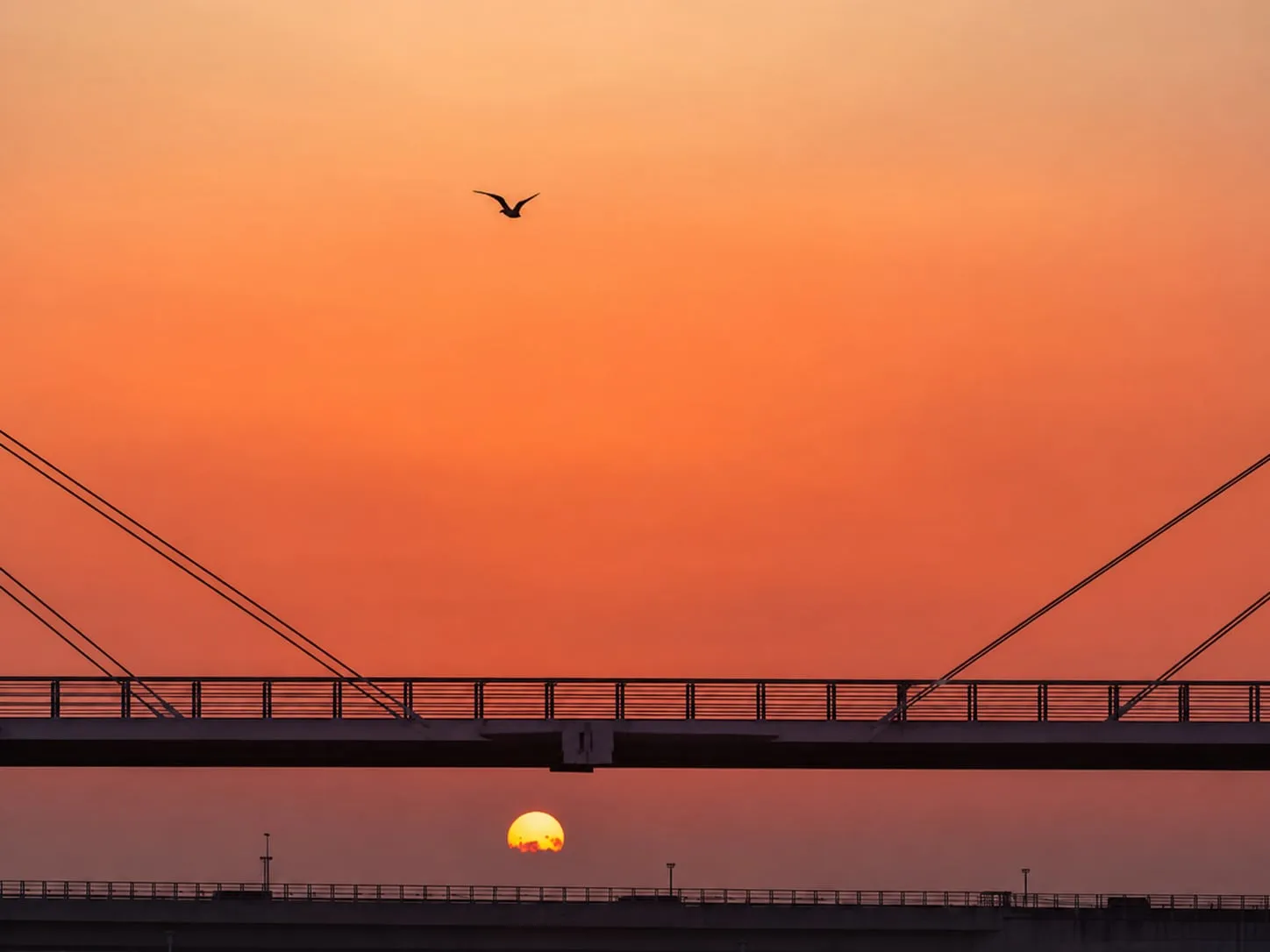
Sokcho is on the East Sea, so the sun rises out of the sea, and in winter it rises late, which makes it easier to catch. On 1 January, sunrise in Sokcho is just after 7:40 a.m. (7:42–7:43 a.m. on 1 January 2026, according to reports citing the Korea Astronomy and Space Science Institute).
Sokcho Beach, right in front of our restaurant, is a good spot for the sunrise. From the night of 31 December to the morning of 1 January, a great many people come to see the sun come up. Sokcho City holds a sunrise event on Sokcho Beach before dawn on New Year’s Day. In 2026 it started at 5:30 a.m. on 1 January (MTN report); the name and times of the event change every year, so check Sokcho City’s announcements in December.
Away from New Year’s Day, the beach is quiet on winter mornings. If the sunrise has left you frozen, our restaurant opens at 9 a.m.
Is Sokcho really quiet in winter?
Sokcho has far fewer visitors in winter than in high summer. According to Sokcho City, January to March 2025 brought 5.49 million visitors across all three months combined, less than twice the figure for August 2025 alone (about 3.28 million).
That said, 31 December, New Year’s Day and the Lunar New Year (Seollal) holiday are busy even in winter, so if you want a quiet Sokcho, avoid those few days.
Where can you warm up in winter?
On the way from Sokcho town towards Seoraksan you’ll find the Cheoksan Hot Springs resort village and Seorak Waterpia. Cheoksan Hot Springs is a public hot-spring bathhouse, and Seorak Waterpia is a water park that uses hot-spring water. Both are good places to thaw out after a winter hike or a blast of sea wind. Admission prices and opening hours change often, so check each one’s website before you go.
What to pack for Sokcho in winter
The average January temperature in Sokcho is around 0°C (based on sources citing the Korea Meteorological Administration’s 1991–2020 climate normals). On many days it climbs above freezing in the daytime, but the sea wind makes the beach feel far colder than the number suggests.
- Hat, scarf and gloves: for waiting for the sunrise or walking along the beach
- Microspikes and non-slip shoes: even Seoraksan’s low-level trails are icy in the shade
- A relaxed day plan: winter days are short, so it is safer to come down from the mountain early
From the Sky Stairs observation deck on the top floor of our building you can see the sea, and in the other direction the ridges of Seoraksan. On days of very strong wind, snow or rain, though, access may be restricted.
Visiting Sokcho in winter
Our restaurant is a 3-minute walk from Sokcho Express Bus Terminal, right in front of Sokcho Beach. Step off the bus and walk over with the sea in view.
If you’ve only ever come in summer, I hope you’ll come once in winter and see Seoraksan under snow and the empty sea.
See the menu · Getting here · 033-635-4488
FAQ
Is the sea at Sokcho worth visiting in winter?
Yes. Apart from 31 December, New Year's Day and the Lunar New Year (Seollal) holiday, there are few people about, so the beaches are quiet, and because Sokcho faces east the sun rises out of the sea. The sea wind is cold, so bring a hat and a scarf.
Can you ride the Seoraksan cable car in winter?
Some days it stops because of the weather. It may not run on particularly windy days, so phone Seorak Cable Car on the morning you go to check whether it is operating.
When is the sand lance and sandfish festival?
It is usually held at Sokcho Port in late autumn. In 2025 it ran from 7 to 16 November on the port grounds at Sokcho Port (Kuki News report); check this year's dates on the Sokcho City website.
You may also like